A small living room rarely needs less furniture — it needs furniture arranged so the floor reads as continuous. These are the layout changes that make the biggest difference, roughly in order of impact.
1. Pull the sofa off the wall
It sounds backwards, but leaving even four inches between the sofa back and the wall reads as deliberate rather than crammed. Pushed hard against plaster, a sofa looks like it was squeezed in; floated slightly, it looks placed.
2. Choose furniture with visible legs
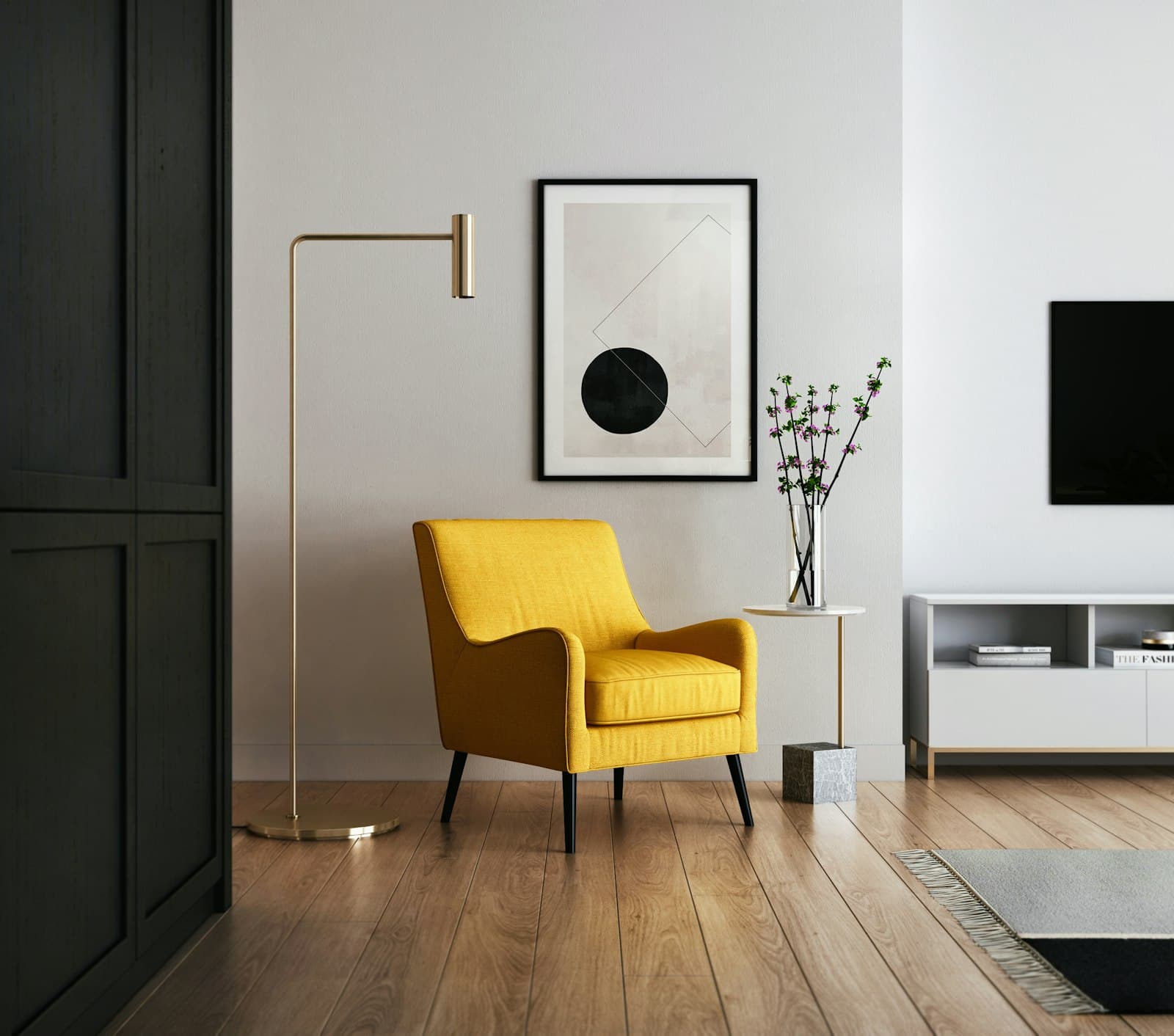
Anything you can see the floor underneath takes up less visual space than a skirted equivalent of identical dimensions. Swap a boxy skirted armchair for one on tapered legs and the room instantly breathes.
- Sofas raised on legs rather than sitting on a plinth.
- Glass or open-frame coffee tables instead of solid blocks.
- Wall-mounted or leggy media units rather than low chunky sideboards.
3. Use one big rug, not a small one
The most common small-room mistake is a rug that is too small. A rug that stops short of the seating chops the floor into pieces. Go large enough that the front legs of every seat sit on it — the room will read as one zone instead of three.
4. Put storage on the vertical
Floor area is your scarcest resource, so spend it carefully. Tall narrow shelving holds as much as a wide low unit while occupying a fraction of the floor, and it draws the eye upward, which makes the ceiling feel higher.
5. Keep one clear sight line
Stand in the doorway. You should be able to see an uninterrupted stretch of floor across the room. If furniture blocks that diagonal, move it — an unbroken sight line does more for perceived size than any paint colour.
6. Corner the seating, not the room
Angling two seats toward each other in a corner creates a conversation area without eating the middle of the room. A round side table between them wastes less space than a rectangular one because there are no corners to walk around.
7. Mirror opposite the light, not next to it
A mirror facing a window doubles the daylight and gives the illusion of a second opening. A mirror on the same wall as the window does almost nothing. Position matters far more than size here.
8. Leave one wall almost empty
Every small room needs somewhere for the eye to rest. Resist the urge to fill all four walls — one deliberately quiet wall makes the others feel curated rather than crowded.
Where to start
If you only do one thing this weekend: pull the sofa forward a few inches and size up the rug. Those two changes cost nothing and consistently make the biggest visible difference.