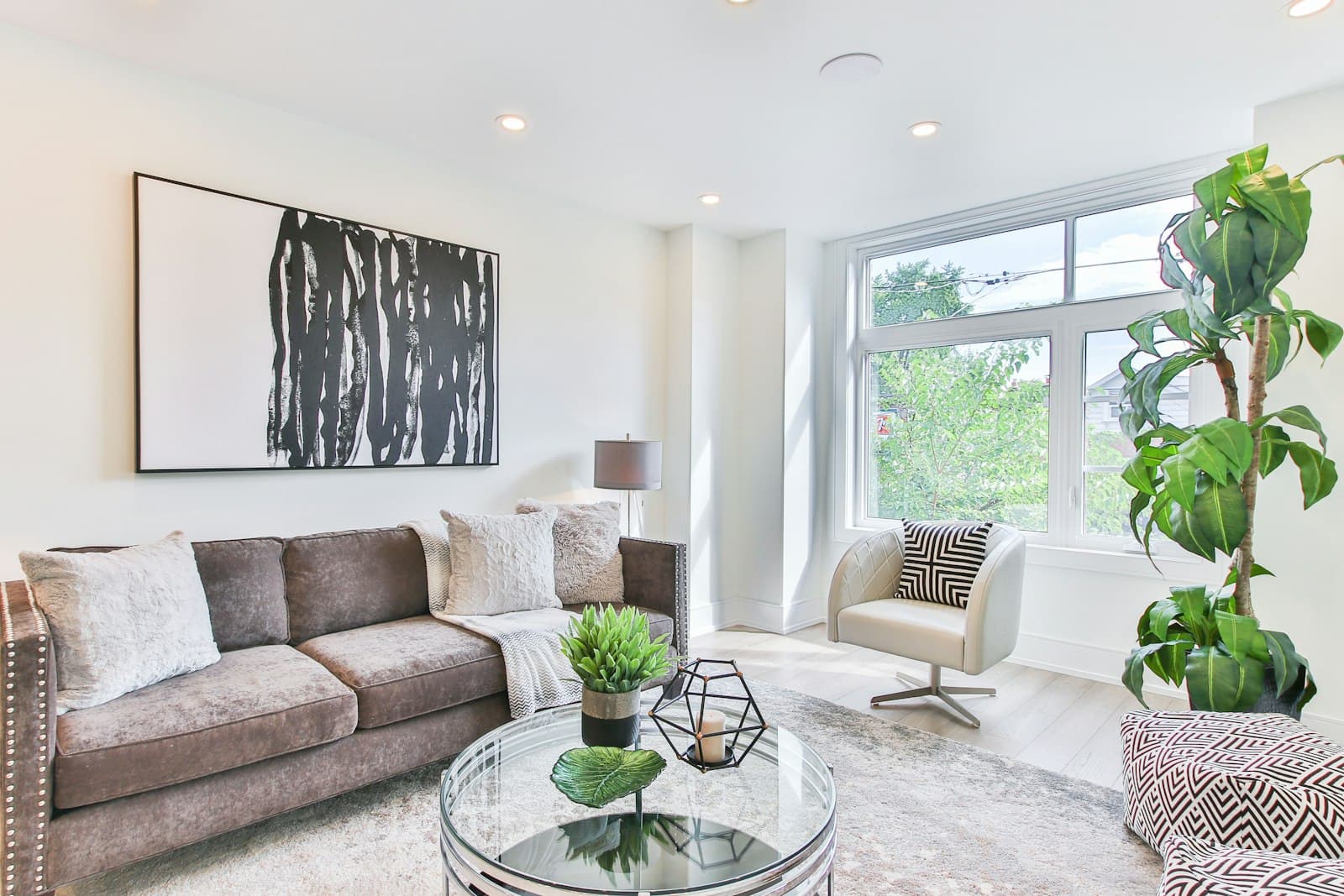
Rooms that feel “off” are usually badly proportioned in colour rather than badly coloured. The 60-30-10 rule is an old decorator's shortcut that fixes most of it: 60% dominant, 30% secondary, 10% accent.
The 60% — walls, floor, big upholstery
Your quietest colour goes here. This is not the same as white; a warm off-white, soft clay or muted sage all work as a dominant tone and are far more forgiving than brilliant white, which shows every scuff.
The 30% — curtains, rug, a second seat
Something that contrasts with the dominant colour without fighting it. If your 60% is warm, keep the 30% warm too — mixing warm walls with a cool grey sofa is the most common reason a room reads as unfinished.
The 10% — cushions, art, ceramics, books
This is where a real colour goes. Ten percent is small enough that you can be bold and small enough that changing your mind costs almost nothing.
How to choose the accent without regret
- Pick it from something already in the room — a rug, a painting, the spine of a book you like.
- Buy one cushion before four. Live with it for a week in the actual light of the room.
- Repeat the accent at least three times around the space, or it looks accidental.
Test paint properly
Paint a sheet of paper rather than the wall, and move it around the room across a full day. Colours shift dramatically between morning and evening light, and against an existing wall colour a sample patch will always read wrong.