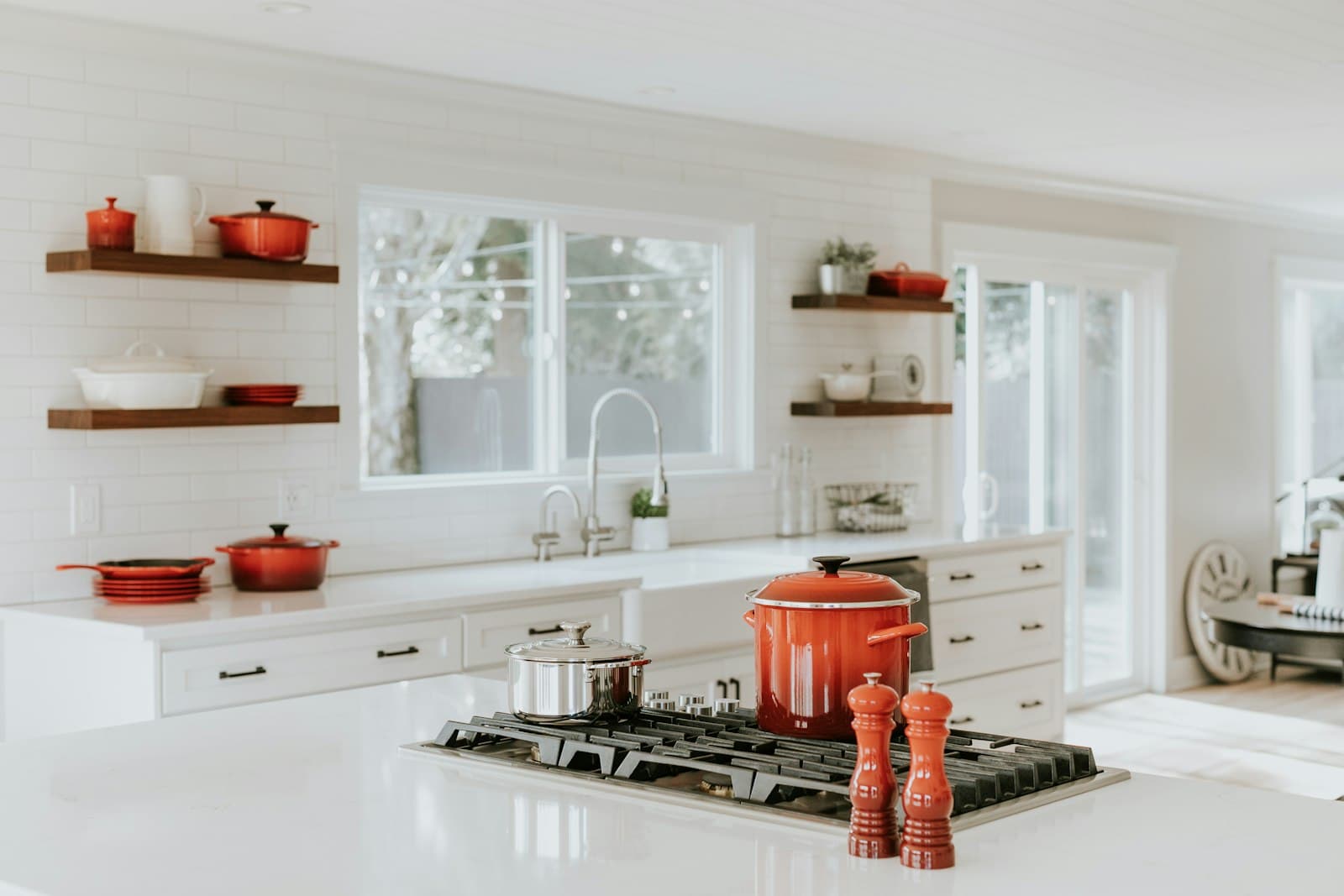
Counter clutter is a storage problem wearing a tidiness costume. Things live on the counter because there is nowhere better, so the fix is deciding what genuinely deserves the space and giving everything else a proper home.
The four-item rule
Anything you use daily can stay on the counter. Everything else moves. In most kitchens that means about four items — commonly a kettle or coffee maker, a utensil crock, a cutting board, and a bowl for fruit.
Be honest about “daily”. The stand mixer used on weekends is not a daily item, however much it cost.
Where the rest should go
- Weekly appliances — a lower cabinet with a pull-out shelf, so weight is never lifted overhead.
- Occasional appliances — the highest shelf. Awkward to reach is fine for something used twice a year.
- Spices — a shallow drawer with an angled insert, or a narrow rack inside a door. Never a deep cupboard, where the back row is invisible and expires.
- Cleaning supplies — a caddy under the sink so the whole set lifts out at once.
Use the vertical space you are ignoring
The wall between counter and upper cabinets is usually the most wasted real estate in a kitchen. A single narrow rail with hooks holds utensils, cloths and mugs, freeing an entire drawer.
The zone that saves the most time
Group by task, not by object type. Kettle, mugs, tea, sugar and spoons should live within one arm's reach of each other, even if that means storing mugs somewhere unconventional. A coffee zone saves more daily seconds than any gadget.
Keeping it that way
Clutter returns through the same door every time: things set down “for now”. Give the counter one designated landing spot — a shallow tray by the door — and reset it once a day. Everything else stays clear because it has somewhere to be.